|

|
 |
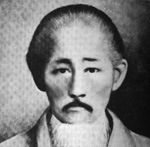
Okinawa Goju-Ryu Karate is very well defined in its history and lineage. From the teachers of Chinese Kempo master RuRuKo to Kanryo Higa(shi)onna (1853-1915), to his successor and most devoted student Chojun Miyagi (1888-1953), the founder of Goju-Ryu Karate, to his most devoted student, elected successor, and founder of the JUNDOKAN Ei'ichi Miyazato (1922-1999), to its present chairman Koshin Iha, Okinawa Goju-Ryu has remained largely unchanged from its original Chinese combative roots. Goju-Ryu's history is a culmination of the native "te" arts of Okinawa which date back over 1000 years, the introduction of Chinese kempo into the Okinawa te arts in around 1372 and the direct study by Higaonna Sensei and Miyagi Sensei in China. Since Okinawa was an annexed tributary state of China until the last part of the 19th century, hundreds of envoys and delegations, both Chinese and Okinawan, were dispatched to Okinawa and China. This rapidly increased the spread of Chinese arts into the Okinawan culture. In 1477, King Sho Shin proclaimed a ban on all weapons by peasants and nobility alike. This ban was an attempt to put down any rebellious activities and secure his rule of the Ryukyus. In addition, he ordered all members of nobility to live within the confines of Shuri Castle where he could keep an eye on any potential throne seekers. Except by palace nobility, this began the secret practice of the martial arts, both empty handed and weapons, by the common people in Okinawa. The Satsuma Samurai Clan, after being exiled from Japan, invaded Okinawa and stormed Shuri Castle. The Okinawan king and family were taken to Japan where they were kept as political prisoners. Okinawa became a puppet state of the Satsuma Clan and Japan, being forced to keep a false loyalty with the Chinese Emperor as to maintain economic and political ties. It is a misconception that the Okinawans and the Japanese Samurai battled each other. The Samurai depended on the Okinawans for food, labor and other goods. Therefore, they protected the Okinawans from bandits, piracy, looting, etc. and in return the Okinawans gave a form of devotion and loyalty. The abolishment of the Samurai class wearing the sword and top-knot, marked by the downfall of the Tokugawa Shogunate and the beginning of the Mejii Restoration Era in 1868, brought Japan and Okinawa out of the age of fuedalism and into "democracy". The Mejii Era focused on promoting education and etiquette to increase morality, nationalism and Japaneseness. The new society eagerly endorsed sports and recreation to advance these new virtues to which modern martial arts were born. The secret practices of Ryukyu Kempo (toudi-jutsu) was no longer necessary and began to emerge openy as a means to preserve and propagate Okinawan culture. Demonstrations for the Royalty of Okinawa and Japan helped bring about an acceptance by the Japanese people. At the turn of this century, Okinawan Karate began to mold in accordance with Japanese society. This helped ensure its acceptance by the influential Japanese martial society and secure Karate's continued practice and growth. Karate was introduced into the school systems in Okinawa and underwent some radical innovations with the emphasis shifting from self-defense to physical fitness. The more dangerous moves and their applications were taken out and thus began a new tradition. This radical change represented the end of what was once a complex and lethal form of self-defense. Originally, the idoegrams for Karate meant "China Hand", with the first character pronounced "tou" or "kara" representing China's Tang dynasty(618-907). This demonstrates the strong ties that Okinawa had with China. 1905 was the first time the present terminology for "kara", meaning "empty" or "void", was used. However, this definiton does not refer to a "weaponless" art as most intend. Herein, "kara" comes to represent a deeper, spiritual embodiment of more than just the physical aspect of martial arts training. Through diligent physical, mental and moral development, the Karate practitioner is unlimited or "void of limits" in their abilities to accomplish the most difficult of tasks. The suffix "-do", as used in judo, kendo, aikido and other arts, means "way" or "path" (pronounced "dao" in Chinese), was added making Karate-Do another avenue by which the Japanese could teach and spread harmony through physical exercise and organized sports. An attempt to organize all Okinawan Karate styles into a single colaboration through shared terminology of technique and "public" kata was interrupted by WWII. Most of the Shuri-te and Tomari-te schools (Shoryn-Ryu) had begun the transition, but Goju-Ryu had not been affected by the disintergration and re-organization process. There are many schools of Karate in the world today, all of which can trace their roots back to Okinawa. However, at the turn of the century there existed three distinct teaching styles, each of which was referenced by the name of the city or region in which it was practiced. Though not proper named styles, they were Tomari-te, Shuri-te and Naha-te. The Tomari-te and Shuri-te styles unified to become known as Shorin-Ryu, which has splintered into scores of other styles including Shotokan, Wado-Ryu, Isshin-Ryu, Kiyoshinkai, TaeKwonDo and TangSooDo. The Naha-te styles, namely Goju-Ryu and Uechi-Ryu, have remained the closest to their original forms.
Profile
of Kanryo Higaonna Class Schedule, Seminars & Events Instructor Profiles | Articles | Public Speaking | Links | Contact Us | Home Glenridge Martial Arts
Academy
All contents © 2003~2010 Glenridge Martial Arts Academy Website development & hosting by The Web For Business.com This site has won awards!
|
|

|
 |